Saturday, July 2, 2011

The Selfish Gene - Not so much!

For those that see The Selfish Gene of Richard Dawkins as a master piece in the subject of Evolution, they must review his opinion. There are some things that kill all the reasoning of it. And some of those things are:
  1. When writing about Why Sex evolved in the Chapter Immortal coils, he states:
    "This is an extremely difficult question for the evolutionist to answer. Most serious attempts to answer in evolve sophisticated mathematical reasoning. I am frankly going to evade it except to say one thing."
  2. And the one (big) thing he has to say is:
    "Whether or not it benefits all the rest of an individual's genes is comparatively irrelevant. Seen from the selfish gene's point of view, sex is not so bizarre after all"
  3. A good question is that, if it is irrelevant, why bother so much with the esoteric asexual examples after all?
  4. Plus, there is a misconception between Group Selection and Species Selection in the Chapter Why are people?:
    "The quick answer of the 'individual selectionist' to the argument just put might go something like this. Even in the group of altruists, there will almost certainly be a dissenting minority who refuse to make any sacrifice. [It] If there is just one selfish rebel, prepared to exploit the altruism of the rest, then he, by definition, is more likely then they are to survive and have children. Each of these children will tend to inherit his selfish traits. After several generations of this natural selection, the 'altruist group' will be over-run by selfish individuals, and will be indistinguishable from the selfish group. Even if we grant the improbable change existence initially of pure altruistic groups without any rebels, it is very difficult to see what is to stop selfish individuals migrating in from neighbourning selfish groups, and, by inter-marriage, contaminating the purity of the altruistic groups."
  5. By definition? He completely forgets to mention Sexual Selection, and he is blind to see that, by definition is of the domain of Sexual Selection, not Natural Selection. So, it not matters if some one is selfish, what it matters is if some one is attractive and nice to the Species, or by other words, less degenerative of its own species. This is the Species Selection that he constantly avoids to mention it, maintaining the clumsily Group Selection argument easy to disrupt;
  6. His book has 81 results for "Natural Selection" and 10 results for "Sexual Selection" a ratio of 8,1 times, almost the same we get in a Google search ("Natural Selection" vs "Sexual Selection")! Now, do you still have doubts about the reality of the existing Status Quo?
  7. The despair is so great, that for the extraordinary difference in size of the genome, he says that is a noncoding DNA, without never realize, or explain, why that hypothetical difference between Eukaryotes and Prokaryotes remains nevertheless.
In conclusion, Dawkins is a fanatic fellow when it came to genes as the absolute Unit of Selection.


I'm absolutely right!

Friday, June 10, 2011

Species' Definition - A materialistic one

There is the conviction that species are a mere classification, and all of the meanings for the word Species maintain that logic. One of the meanings is the following:
"A group of organisms capable of interbreeding and producing fertile offspring."
The problem with this definition is that does not put Species, in terms of meaning, at the level of Organism. Being a group of organisms it turns out to be a mere classification, and that is the main problem with this definition, its lack of substance.

I defend that Prokaryotes represent a Two-Layer scheme while Eukaryotes a Three-Layer one (see The Truth about Species! - Part 3 - Inductive Nature).

What are those three layers? Simple, the existing two of Prokaryotes plus one, Species. In this Scheme we have, Environment, Species and Organism.


Prokaryotes vs. Eukaryotes, NS - Natural Selection, SS - Sexual Selection

Now, you may notice that Environment and Organism have a materialistic definition, an organism is any contiguous living system, and an Environment encompasses all living and non-living things occurring naturally on Earth or some region thereof. Note that this means that an Organism may be a single animal as it may be multiple, like in the case of ants, where an Organism as a living system is the Colony, maintaining this way the concept of interbreeding (colonies) and the notion of Species as the blueprint of colonies with all animals' characteristics and interactions, including the ones composing the same Organism that aren't able to reproduce (worker ants). So, bottom line, an Organism may also be something abstract, like a Colony of ants (Superorganism), as the sole unit capable of interbreeding and producing fertile offspring!

Question, why there isn't a materialistic definition for Species? Because most evolutionists refuse to see Species as something equally materialistic as an Organism.

Now we will try to construct our own materialistic definition:
"Species, a product of meiosis, is the proxy between Environment and Organism."
And in which way Species is a proxy? In the way that evolution doesn't work on Organisms, instead, it works on this Proxy that we call Species.

Seeing Species as something real, something materialist, the definition is as natural as Environment or Organism.

The view of this Proxy makes it clear that, albeit some traits of Eukaryotic organisms increase the difficulty of reproduction, like the evolution of the intercrossing, they are the best prove that Evolution works on Species and not on Organisms. When it comes to Organisms, they only relate with this Proxy in a form of Sexual Selection. In conclusion, there isn't Natural Selection or Evolution for the Eukaryote Organism, the Species is there precisely for that.

If you still insist in exotic examples, like Asexual Species, note that Asexual Species are an impossibility, or if you prefer, simple unnatural to Eukaryotes.

"I have repeatedly stressed how difficul it is to state something general about asexuals that with reasonably accuracy will hold for all or at least most of them. One such generalization is, however, of great importance. It says that asexual lineages are, on average, shorter lived in evolution than sexual lineages. This conclusion is based on the fact that asexuality appears constantly among sexual eukaryotes, while no reverse evolution – from full asexuality to sexuality – is normally to reckon with. Nevertheless, the eukaryotic tree remains dominated by sexuality. This situation would not hold unless asexual lineages have a shorter lifespan on average than sexual lineages. The relative disadvantage of asexuality is directly seen in the eukaryote tree in all its immensity, where sexuality dominates all major branches. The same logic applies, however, also to every derived lineage, down to for example the water-flea Daphnia pulex that generate asexuals at a considerable rate and still retains sexuality as their basic reproductive mode (Paland et al. 2005; see Chapter 15)." - in Lost Sex, The Evolutionary Biology of Parthenogenesis


Tree of Life with Genome Size - Dismissing Asexual Species

Saturday, May 28, 2011

New species evolve in bursts - One more to the score

I'm starting to be like Darwin, like when people talk about Men from Apes.

When I say that there aren't Asexual Species, people normally forget that I'm taking from granted that only Eukaryotes have species.

Albeit the complains, again, and again, evidences fall in my hands telling me that I'm right, only Eukaryotes have species, because only them have Sexual Selection.

I found this more two for my increasing score:
  1. New species evolve in bursts;
  2. How many species of prokaryotes are there?.
The first one tells you that Sexual Selection promotes Punctuated Equilibrium, like my same conclusion in my post Inductive Nature, and the second one ends up making the following statement:
"Thus definition of species on this basis is not adequate for assessing the functional diversity of prokaryotic communities."

This last one, subscribes my post Why Sex, where I say:
"The placed pieces of the classic view do not solve the puzzle, because they are wrongly positioned in the next way:
  1. Speciation (all organisms);
  2. Sexual selection (some species)
Those pieces need to bee changed, like this:
  1. Speciation (some organisms);
  2. Sexual selection (all species)."
It's amazingly how Classical Evolutionist are starting to became like Evangelist, with Natural Selection exclusivity has his GOD.


Refusing the Status Quo is the fastest way to deprecation.

Monday, May 23, 2011

Important FAQs about Evolution - Fighting the Status Quo

Here are some FAQs for some important questions about Evolution:
Q: Why Sexual Reproduction?
A: Because it's the mechanism of speciation.

Q: Is there Asexual Species?
A: No, because sex is the mechanism of speciation.

Q: What undermines Complexity in Natural Selection?
A: Entropy.

Q: What liberates Natural Selection from Entropy?
A: Sexual Selection.

Q: What supports Evolution of Complexity with Sexual Selection?
A: Induction.

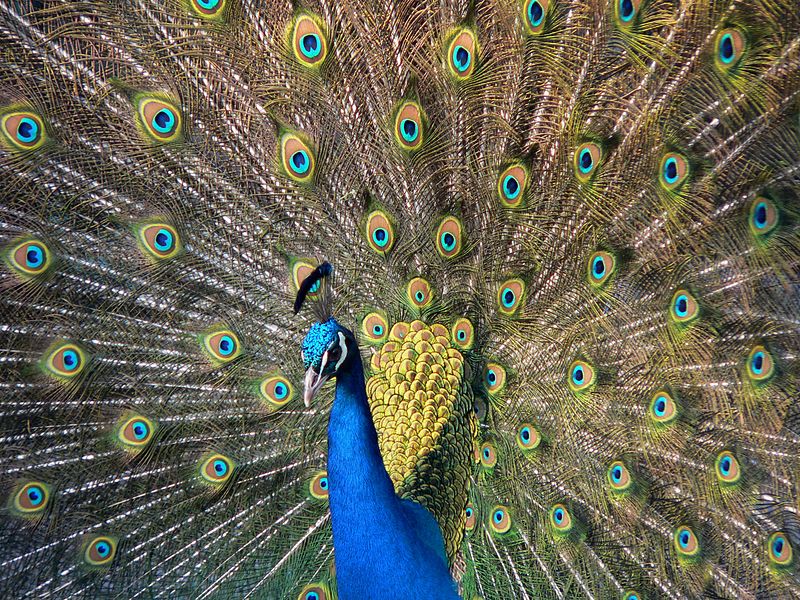
Q: Is the Evolution of Peafowl's tail a good example of Sexual Selection?
A: No, Evolution is Unachievable trough Sexual Selection.

Q:
What is the Cause of the Cambrian Explosion?
A: Cognition (Nervous Systems) plus Sexual Selection.

Q: Why evolutionists love to speak of Natural Selection but usually omit Sexual Selection?
A: Because in general they support Natural Selection exclusivity.

Q: Why in Google "Natural Selection" returns 10 times more results than "Sexual Selection"?
A: Because the Status Quo is committed in the Natural Selection exclusivity.

Q: Why in Google "Evolution" returns 40 times more results than "Natural Selection"?
A: Because it's just one word.

If you have more questions please ask...!


Relax Darwin, it's also Natural Selection!

Saturday, May 14, 2011

Eukaryotes from Prokaryotes and the Greatest Lie - For the Folks

In the People arena, there is the supposed knowledge about evolution that has been used as argument for a serie of events that intended to prove, or justify. People think that, for example, a systematic selection in an competitive environment is a good example of Natural Selection. This kind of survival of the fittest is in my opinion, the Greatest Lie that persists, because is one that supports as Natural something that isn't.

In a complex environment, or reality, Natural Selection isn't the systematic, or competitive actor, Sexual Selection is. So, in a complex world, systematic selection is Sexual Selection accordingly to a logic, or abstraction, that in reality, is the only product of the so argued Natural Selection. However, in the best interest of that logic, or abstraction, it's important that the competitors, or elements, fighting for its acceptance, believe in their competition as a sort of Natural Selection, were in fact, is Sexual Selection. This is the picture of the Greatest Lie.
"After the origin of eukaryotes the next transition suggested by Maynard Smith is the origin of sex. Sexual reproduction, the sharing of genes between two individuals to produce offspring, is normally viewed as a primary character trait of all eukaryotes. There are many eukaryote species that can reproduce asexually, but there are only a few that must reproduce asexually, and in those cases it is usually clear that they stem from sexual ancestors - They have given up sex, rather than never having had it in the first place." - Tim Lenton, Andrew Watson, 2001, Revolutions that Made the Earth
Next we will see the differences traditionally used to distinguish eukaryotes from prokaryotes listed by Mayrd.

PropertyProkaryotesEukaryotes
Cell size
Small, ~1-10µm Large, usually 10-100µm
NucleusAbsentPresent
Endoplasmic membranes
AbsentEndoplasmic reticulum, golgi apparatus present
DNASingle circular chromosome, not complexed with proteins. No introns, few transposable elements
Multiple linear chromosomes contained in nucleus. Many introns, transposable elements
CytoskeletonAbsentPresent
OrganellesAbsentPresent (mitochondria, hydrogenosomes, chloroplasts, etc...)
MetabolismDiverseMostly aerobic
Cell wall
Protein wall in (eu)bacteria
Cellulose or chitin, none in animals
Genetic recombination
Lateral gene transfer
Meiosis/sex
Cell division
Binary fission
By mitosis
FlagellaRotatingUndulating cilia
RespirationOn membranes
Mitochondria
Environmental tolerance
Wide range of temperatures, pressures, chemical tolerance, resistance to desiccation.
Narrower range of tolerance
Adapted from: Mayar, 2002, What Evolution Is

If you are one of those strongly committed to the Natural Selection dogma, you should read the following sentences:
"If sex did not reduce variation, then there would be as many species as there are individuals" - Charles Darwin (1838-1839)
"Sex usually results in extreme slowing of evolution" - Root Gorelick Henry H. Q. Heng, 2010.Sex Reduces Genetic Variation: A Multidisciplinary Review
"We reviewed arguments from a diverse assemblage of biologists—ecologists, cancer biologists, population geneticists, paleontologists, molecular biologists, genome theorists, epigeneticists—who implore that sex reduces genetic variation." - Root Gorelick Henry H. Q. Heng, 2010.Sex Reduces Genetic Variation: A Multidisciplinary Review
In the end, it will be obvious that Sexual Selection is like a wedge, maintaining the achieved evolution and encapsulating the entropy of Natural Selection inside the organism's layer. In this way, the achieved evolution is protected at the cost of wasted organisms, washing away any entropy from Natural Selection. However, this view stills very oppressed, because Natural Selection exclusivity is the spine of the contemporaneous philosophy, serving the status quo.

But this is supposed to be for the Folks' eyes, right? Yes, it is. And so, I draw my own table to make clear what is and what isn't Natural Selection in a complex environment, a table that works as an instrument to avoid folks being fools.

Property
Natural Selection
Sexual Selection
Subject
SpeciesOrganisms
TimingA posteriori
A Priori
Frequency
SporadicSystematic
Effect
Diversity
Sameness
Vulnerability
EntropyInduction
UniverseLogicalPhysical
EvolutionAchievableUnachievable
ConceptDynamicStatic
Action
Liberal
Repressive
Expression
Cooperative
Competitive
Interaction
Complementary
Segregative
Condition
Unstable
Stable
NatureRandomnessIntentional/cognitive
Natural or Sexual Selection, the good question.

The first question you should make about yourself is, are you an organism? Now, even if you made part of a very strict military selection, for a special force, you may be made to think in that selection as Natural Selection. But think a little more, where is the Logic? Is the military soldier the Logical or the Physical element? The answer is simple, the soldier is the physical element. But where is the logical one? Well, the process of military selection itself is the logical element. Is the criteria for the "good soldier" that in the future will be Natural Selected, not the soldier itself, the last one was Sexual Selected in the past, in a systematic way!

Now the Greatest Truth. Your condition of organism, no matter the species you belong to (obviously one), puts you in a state of systematic testing. Because you belong to the physical world, evolution for you is an unachievable thing, the only thing that achieved something was the Species. This Greatest truth is a dramatic one when it comes to organisms, it's the drama of systematic provision of your good will for what the species it's concern, a provision that isn't meant to be definitely achievable, except for the logical element, the species itself.

But there is more, it's not only how the organism is made, it's also what that same organism wants. Think a little, what is connecting organisms that makes them wish essentially the same? Do you think that, because something is thought in an common way turns out to be a fact? Think in optical illusion, is not that common in humans? The conclusion is obvious, your will comes from the species, your feelings of reward or regret are constructions that are to much common to be really yours.

For those organisms that make questions about the meaning of life, and about the path to happiness, here is the answer:
"Life is waste, and happiness relief."
Is this pessimist? Well, all depends, if are the species commanding the organisms or vice versa. Until now, the species have been ruling with no exception.


A Good Soldier like a Good Specimen under the Species' Eyes

Monday, January 17, 2011

Sex is the mechanism of speciation! - For the Septicks

Some people truly become annoyed with the following What Ifs:
  1. What if speciation is more than an handy classification?
  2. What if speciation is an acquired skill?
  3. What if Sexual Selection is the mechanism of that skill?
Those people say that I'm completely wrong, and that I do not understand what a Species is. In their opinion:
"Species are only a human construction that is convenient for us humans to understand the world, but which has no special biological value."
However, I show some quotes that surely those people are unaware:
"The appearance of sexual reproduction i.e., syngamy, genetic recombination and meiosis has long been considered a major evolutionary threshold, giving rise to a fundamental increase in variation (Schopf et al. 1973), a novel ability to remove deleterious mutations (Muller 1964), and indeed ‘‘true’’ species and speciation (Stanley 1975). The presence of at least two distinct spore-producing phases in Bangiomorpha, and their close comparison to sexual phases in modern Bangia, presents a convincing case for eukaryotic sex by at least ca. 1200 Ma." - in Bangiomorpha pubescens n. gen., n. sp.: implications for the evolution of sex, multicellularity, and the Mesoproterozoic/ Neoproterozoic radiation of eukaryotes
and another one:
"Sexual reproduction predominates among organisms mainly because most evolutionary change is concentrated in speciation events, and asexual species cannot speciate in the normal sense. Asexual clones seldom diversify rapidly enough to overcome normal rates of extinction. In contrast, phylogenetic groups of sexual species (clades) commonly develop broad, heterogeneous adaptive zones rapidly enough to ensure survival." - in Clades versus clones in evolution: why we have sex
and last but not least:
"For over a century, the paradigm has been that sex invariably increases genetic variation, despite many renowned biologists asserting that sex decreases most genetic variation. Sex is usually perceived as the source of additive genetic variance that drives eukaryotic evolution vis-à-vis adaptation and Fisher's fundamental theorem. However, evidence for sex decreasing genetic variation appears in ecology, paleontology, population genetics, and cancer biology. The common thread among many of these disciplines is that sex acts like a coarse filter, weeding out major changes, such as chromosomal rearrangements (that are almost always deleterious), but letting minor variation, such as changes at the nucleotide or gene level (that are often neutral), flow through the sexual sieve." - in Sex reduces genetic variation: a multidisciplinary review


Modern mature (multiseriate) Bangia atropurpurea in transverse cross-section. A–C, Asexual/vegetative filament showing the radially arranged wedgeshaped cells. D, Portion of female plant showing the 8–16 fertilized carpospores produced by each wedgeshaped cell. E, Portion of male plant showing the ca. 128 spermatia produced by each wedge-shaped cell. Redrawn from Garbary et al. 1980.

No special biological value? Are you kidding?

References:
An Open Letter about Natural and Sexual Selection by Rui Monteiro - 2010
The Truth about Species! - Part 1 (Why Sex)
The Truth about Species! - Part 2 (Cambrian Mystery)
The Truth about Species! - Part 3 (Inductive Nature)
The Truth about Species! - Part 4 (Entropic Nature)

Saturday, November 6, 2010

The Truth about Species! - Part 4 (Entropic Nature)

This will be the last post of the series of 4. Today I will try to close this subject about species.

In the post about the Cambrian Mystery, there is a very important thing that was not talked about. Today I want to show that life has a real cancer, this cancer has its roots in the entropic physical world. Nowadays, entropy in evolution is a no man's land. Here the Classic Evolutionist has little to say, for him mutations take millions of years where the deleterious ones are minimized by Natural Selection.

What you don't see a Classic Evolutionist doing, is answer the following questions:
  • How can Natural Selection minimize frequent day by day deleterious mutations being a very slow process?
  • If de novo deleterious mutations are so frequent, why aren't called entropic mutations?
To have an idea of the amount of this deleterious mutations, we may refer the numbers from the CDC showing America's leading types of birth defects. Researchers looked at the U.S. rate of birth defects from 1999-2001.

Here's the list of the six major types of birth defects covered in the CDC's report, along with the number of babies per year born with those conditions:
  1. Genetic defects (Down syndrome and other conditions): 6,916 babies per year;
  2. Mouth/facial defects (cleft lip and/or cleft palate): 6,776 babies per year;
  3. Heart defects: 6,527 babies per year;
  4. Musculoskeletal defects (including arm/leg defects): 5,799 babies per year;
  5. Stomach/intestinal defects: 2,883 babies per year;
  6. Eye defects: 834 babies per year.
Birth defects are the leading cause of infant death and contribute substantially to long-term disability, the CDC reports.

As we can see in the following graphic, the incidence of this kind of diseases is more or less the same along time, something that make us suspect of its systematic character, something that strongly indicates limitations intrinsic to the reproduction system.


From CDC

And this isn't all. If doubts remain, we just have to point out the correlation between age and autosomal trisomy. The Relationship between Maternal Age and Chromosome Size in Autosomal Trisomy by N. Risch et al., proves that not only Trisomy 21 is exponential correlated with the maternal age, but also, many others trisomies.


Exponential incidence of Down Syndrome

In this case, not even Chernobyl can compete with age when it comes to cause birth defects.
"In terms of the sheer number of cases, genetic factors are the most important cause of congenital anomalies. It has been estimated that they cause approximately one third of all birth defects (see Fig. 19-1) and nearly 85% of anomalies with known causes. Any mechanism as complex as mitosis or meiosis may occasionally malfunction; thus, chromosomal aberrations are common and are present in 6% to 7% of zygotes. Many of these early embryos never undergo normal cleavage to become blastocysts. The changes may affect the sex chromosomes, the autosomes, or both (chromosomes other than sex chromosomes). In some instances, both kinds of chromosome are affected. Persons with chromosomal abnormalities usually have characteristic phenotypes, such as the physical characteristics of infants with Down syndrome. Numerical and structural changes occur in chromosome complements." - in Before We Are Born, Keith Moore and T. V. N. Persaud


Fig. 19-1: Aneuploidy - a deviation from the human diploid number of 46

Here the Classic Evolutionist supports Natural Selection exclusivity arguing that the severity of the previous anomalies have a serious effect on health, making impossible the achievement to the reproductive age, and so, minimizing this anomalies in the gene pool. However, they don't have nothing to say about the systematic character of this anomalies.

But even with the argument of the reproductive age we have problems, for instance, if we include the children up to 2-year-old, we have an increase of incidence of birth defects from 3% to 6%! And in the case of including the up to 5-year-old children we have 8% of incidence, due to the fact of some birth defects being only detectable at upper age. And more can be said:
"Congenital anomalies may be single or multiple and of major or minor clinical significance. Single minor anomalies are present in approximately 14% of neonates. Anomalies of the external ear, for example, are of no serious medical significance, but they indicate the possible presence of associated major anomalies. For example, the presence of a single umbilical artery alerts the clinician to the possible presence of cardiovascular and renal anomalies." - in Before We Are Born, Keith Moore and T. V. N. Persaud
Those minor anomalies doesn't necessarily diminishes the population at fertile age, making Natural Selection exclusivity a little bit limited.

Now that we start to realize that Entropic Nature aren't a far-fetched idea, we can see it as a barrier to the development of complex organisms as explained in the following graphic:


Per-site mutation rate versus genome size for CChMVd and other biological
entities

"These primitive replicons would also resemble hammerhead viroids in their extremely error-prone replication. Thus, our results support the notion that the emergence of replication fidelity mechanisms was central to the evolution of complexity in the early history of life." - in Extremely High Mutation Rate of a Hammerhead Viroid by Selma Gago et al.
Complexity is an important issue, and so, it's unsurprisingly that human activities, like production, have to solve the same problems as those that from the beginning undermined life's complexity.

In the end of the 20st century, increased complex products, like chips, demanded a new and more strict kind of quality control. The old 3 Sigma became obsolete to this new increased complexity, and for those new extremely complex products, like mobile phones, computers, and other electronic devices, was drafted the new 6 Sigma, resulting in 3.4 defects per million items, something that makes nature blush of shame. Not so much? Yes, you are right!

We should not misunderstand life. Organisms are of an extremely and unimaginable complexity and incomparable with the most complex devices ever made. However, my point isn't about increased conformity, it's more about the need for a new form of reproduction, the Sexual Reproduction in life.

As told in The Truth about Species! - Part 1 (Why Sex) post, Sexual Selection is the mechanism of speciation. So, this mechanism has to guarantee the health of the specie.

Because the Classic Evolutionist lives obsessed with the sexual dimorphism, that in fact is no more than a curiosity, he became a passionate to the point of believing in this sexual dimorphism as a prerequisite for sexual selection. For me, sexual dimorphism is just a variable trait specific to the specie, so, you may have great dimorphism, middle dimorphism, low dimorphism and no dimorphism at all (see New Mexico whiptail in Why Sex), and yet, because they are all species, they are all sexual mating organisms (see Why Sex). Now I will exemplify how Sexual Selection blocks Replication Entropy accordingly to that same dimorphism in the next manner:


Sexual Reproduction same as Gaussian Product

Sexual Reproduction same as Gaussian Product, because attractive organisms are more likely to inbred between them, and consequently, produce more offspring. It's up to species to guarantee that organisms, albeit similar in traits, doesn't became able to reproduce if aren't conform to its will (sexual attractiveness).

For the special case of two Gaussian probability densities:


the product density has mean and variance given by:


Those two Gaussian curves represent the distribution of Sexual Attraction (relative to a protocol's blueprint) for each sex. Note that as told before, this is a kind of fitness at the species level, that has nothing to due with environmental fitness. This fitness is all about Sexual Selection (a priori) and nothing about Natural Selection (a posteriori).

For a Classic Evolutionist, Sex is all about diversity, and more diversity. So, it's hard to convince him of Sex as a mechanism of Speciation, as a mechanism of sameness, where inducted diversity is the only diversity, as explained in The Truth about Species! - Part 3 (Inductive Nature). But as we can see, Sexual Reproduction reduces variance, because the product of two Gaussian probability densities with variance less than 1 (high levels of replication fidelity), results in a new Gaussian probability function with a reduced variance, reinforcing the Species' Kernel.

Lower variance greater conformity (narrow bell shape)

In An Open Letter about Natural and Sexual Selection, there is a simulation of sexual reproduction as the product of two Gaussian probability densities, where it's concluded that the Mating Process is the most value compared to asexual reproduction.


Asexual vs. sexual reproduction in replication fidelity

If the problem is the expression entropy, we can call it noise, distortion, inefficiency, drift or any other name that essentially means the same, divergence of alignment.

Now we realize that induction is the main tool against entropy, and population number is the fuel of that induction. With low populations induction loses its strength, and the fitness of the organism can't be sexual selected accordingly to the now weakened fitness of the respective specie, because this species starts to act more as a singular organism than a group of them.

There is a miss-intuition that says that genetic homogeneity is the cause of genetic diseases (intrinsic to the organism). But if genetic diseases are distortions how can we say that there is a genetic homogeneity? In fact, it's the other way around. What we have is a distortion trough entropic mutations that become accumulated in the gene pool, and finally, because the mechanism of induction is weakened, those mutations start to being fixed trough genetic drift, and it's this fixation that indicates a greater vulnerability to intrinsic diseases that have never before been able to fixate.

For instance, the Cheetah species accumulated intrinsic genetic diseases, due to low population size able to induce otherwise, and so, it become divergent of its own otherwise normal specie, trough genetic drift and resultant genetic diseases.


Random genetic drift of a single given allele (Bigger the Population lesser the diversity)

By other words, we are assisting to a Population bottleneck, something that doesn't only supports the notion of Species' Kernel, but also the irreversibility of a species opposed to what it happens in the case of a polymorphism, just as supported in all the previous posts (see Inductive Nature).

To end this series of posts, I can add to the second post about the Cambrian Mystery, that the explosion may also happened mainly due to this entropic nature conquered by the new speciation skill, with induction as his essence.

References:
An Open Letter about Natural and Sexual Selection by Rui Monteiro - 2010
The Relationship between Maternal Age and Chromosome Size in Autosomal Trisomy by N. Risch et al.
Before We Are Born, Keith Moore and T. V. N. Persaud
The Truth about Species! - Part 1 (Why Sex)
The Truth about Species! - Part 2 (Cambrian Mystery)
The Truth about Species! - Part 3 (Inductive Nature)

Monday, November 1, 2010

The Truth about Species! - Part 3 (Inductive Nature)

Today I will specify the terms I have been used before. One of the terms are Software. When I say that Sexual Selection it's more about Software than Hardware what I'm really saying?

For Software I mean what Faraday expresses about Matter and its Lines of Force, whose theory holds that all reality is made up of force itself. So, I will explore this Lines of Force to explain speciation.

In An Open Letter about Natural and Sexual Selection, we have a new scheme, that gives a new meaning to the word Species.


Scheme for the The Survival of the Fittest

Next we see stated the following about the The Survival of the Fittest:
"By analogy, it means the survival of the most adapted object to the environment. By induction, it means the survival of the most adapted protocol to the environment induced by its objects." - in An Open Letter about Natural and Sexual Selection
Looking to the scheme, we can see that speciation doesn't apply to Prokaryotes. There is a void in the line of species.

In the sentence that follows, we see speciation associated with induction, that supports a take off of a new layer, here called protocol. The organisms aren't considered in an isolated way, the fitness is now made collectively, it's the species the most fitted not the organism, supporting a strict differentiation between organism and specie.

Recognizing this layer of species as a reality, and not just as a mere classification, we are able to frame Sexual and Natural Selection per interfaces. So we have for each interface:
  • Concept/Protocol: Natural Selection;
  • Protocol/Object: Sexual Selection.

This view is fundamental for any step further in the explanation of evolution.


Now we will take the concept induction a little further. We will try to construct a good metaphor for this induction idea.

The Electromagnetic Induction is a good example of Induction, where a systematic variation of a magnetic field results in an inducted electric current.

We know that the most efficient way to induce an electric current it's trough a solenoid, or a coil if you prefer. This solenoid is made of loops or turns, where the Inductance (the induced electric voltage) is proportional to the square of the number of loops, and some how to the coil radius.


Solenoid as a group of loops

Now we will construct our metaphor. I stress the word metaphor, to rest no doubts about this reasoning.

In this metaphor we have:
  1. Magnetic field = Environmental Opportunity;
  2. Solenoid = Species;
  3. Loop = Organism;
  4. Induction = Selection;
  5. Loop Fitting = Sexual Fitting;
  6. Alignment (torque vector) = Environmental Fitting.
In this example we will think in a species of birds and two differing environmental opportunities (small seeds in patch A, large seeds in patch B). This two differing environmental opportunities can result in two polymorphisms or in two species through a speciation process. This environmental opportunities need to be two previously unexplored opportunities, or else, they aren't opportunities at all.

Thinking in the Solenoid metaphor we have the following two scenarios:


1. Polymorphism as a single bended solenoid (specie)


2. Speciation as two straight solenoids (species)

We may argue that there is a Ultimate Limit State beyond which the species breaks up. The line of force comes from the opportunity that resembles a strong magnetic field.

This disruption is well described in the following images:


Simulated speciation with the punctual population split - in On the Origin of Species by Natural and Sexual Selection


Simulated speciation with the punctual mutational process - in An Open Letter about Natural and Sexual Selection
"In this way, a polymorphism is reversible if, for any case, the associated opportunity ceases its effect. On the other hand, a speciation has its own kernel, ending the previous implication, that is, a speciation is not reversible if, for any case, the associated opportunity ceases its effect." - in An Open Letter about Natural and Sexual Selection
In the same article sited before it's stated the following:
"However, there is one thing that I think as a wrong presumption. The presumption that the migration rate leads the speciation, because is another example of bad intuition. In the Fig. 3 of your article, where you correlate migration rate with sigma, there is a clear symmetry. This symmetry reveals a correlation between sigma and migration rate, with the first causing the last! Being so, migration rate is the consequence, and not the cause." - in An Open Letter about Natural and Sexual Selection


Fig. 3. Effect of ecological parameters on the rate of speciation. - in On the Origin of Species by Natural and Sexual Selection

For the question, in which way it's Sexual Selection the mechanism of speciation? We may answer that Sex; Selects the Fitting of the Organism accordingly to the Fitting of the Specie, which in turn, Fits the Species to the Environmental Opportunity, or metaphorically saying, Inducts the Alignment of the Loop accordingly to the Alignment of the Solenoid, which in turn, Aligns the Solenoid to the Magnetic field. In other words, this opportunity is always expressed on Species, because there is always a significant population of Loops that retain its Fitting as Sexual Fitting.

By other words, Sexual Selection forces the integrity of the Species (Solenoid), not allowing any change by nothing else than an opportunity acting in an aggregated way, and it's exactly because of this aggregated way, that species, instead of polymorphisms, are reversible only by extinction.

So Sexual Selection isn't about diversity as many try to prove! Sexual Selection is about aggregated exploitation of existing opportunities. Sexual Selection doesn't support diversity by itself, Sexual Selection "accepts" aggregated diversity at the cost of an opportunistic exploitation.

For this aggregated diversity, we may even think in the premises of another kind of induction, the mathematical induction. Here we basically need two conditions:
  1. The basis: One chosen organism within one given aggregated diversity represents an opportunistic exploitation;
  2. The inductive step: An opportunistic exploitation by one organism within one given aggregated diversity, implies the same opportunistic exploitation by one other subsequent organism within the same aggregated diversity.
The previous conditions are needed to any specific diversity become dominant in an opportunistic niche.
"Mutation is the resource of information for any species, however, it has to be amplified by an Opportunistic Exploitation to be convergent at the Species level." - in An Open Letter about Natural and Sexual Selection
The speciation skill forces the integrity of the species with the respective kernel, so we should expect long periods of stability and short periods of fast change (speciation). In general, we may conclude:
  1. Prokaryotes - Phyletic gradualism;
  2. Eukaryotes - Punctuated equilibrium.
This is probably one of the main reasons why transitional fossils tend to be missing links.

To be continued...

References:An Open Letter about Natural and Sexual Selection by Rui Monteiro - 2010
On the Origin of Species by Natural and Sexual Selection by G. Sander van Doorn, Pim Edelaar, Franz J. Weissing - 2009
The Truth about Species! - Part 1 (Why Sex)
The Truth about Species! - Part 2 (Cambrian Mystery)

Saturday, October 30, 2010

The Truth about Species! - Part 2 (Cambrian Mystery)

Today I will clarify my previous post about speciation as an acquired skill. I will try to answer the question or observation that I am making a circular argument!

Thirst of all, I'm not one of those that support Ring Species, so, I am the thirst one to refuse those kind of circular arguments as you can see in my post Ring Species another Illusionist Trick.

My point is very simple, I defend that speciation is an acquired skill. I'm just saying that speciation isn't possessed by all organism, I'm saying that there is a very sharply defined frontier line between organism with and without speciation, I'm saying that that frontier is between Prokaryotes and Eukaryotes!

My following argument is strongly based in the brilliant article of Rui Monteiro entitled An Open Letter about Natural and Sexual Selection.

In the article mentioned before, that I strongly recommend, we see the following very important concepts:
  1. Potential Speciation;
  2. Polymorphisms;
  3. Species' Kernel.


Delimitation of the Species' Kernel

This Species' Kernel is a landmark in the perception of the evolution of life. However, for more ingenious that you can think about that landmark, the terms Prokaryotes and Eukaryotes already have the answer.
Prokaryotes - Without a nucleus;
Eukaryotes - With a nucleus (kernel).
The previous definitions relate to the Hardware of the organism, but what a classic evolutionist can't do, it's to turn this Hardware concept in a Software one. If they did, it would be evident that speciation is all about nucleus, the never glimpsed, Species' Kernel.

Kernel, nucleus or core, are names for a very important concept, the concept that something can be very strict, and at the same time, very versatile. For example, your computer system is very common among other computers. However, the way each computer system or operating system is configured, reveals a great adaptation to circumstances in a very independent way from the system itself. This concept does not apply only to computers, or are exclusive to human activities, and aren't necessary an human innovation.

Planet earth has a core, sun has a core, dismissing any intention or even life, it's something intrinsic to nature. Brains, from the more simple to the more complex have a core, the so called Hypothalamus, making something natural even to life. Even physics reveal that the materialistic world of atom have a center, designated by Atomic nucleus, amazingly discovery only in the 19th century. So, we should not be surprised that the concept of nucleus, as the base of speciation, remains a very obscure subject.

With nucleus, or kernel, we have another important concept, called layer. Nowadays everything that is produced has layers, and the respective process itself is layered. You are seeing this page thanks to protocol layering, with the OSI model as its best metaphor. In fact, protocol layering its the core of the Internet revolution that we see today. No wonder that life caught its potential thousand of millions of years ago, giving birth to Eukaryotes and its layered Polymorphisms!

What have a classic evolutionist to say about this? In fact nothing! For him, there are only Natural Selection, and he is blind to the point of thinking in an animal as a bacteria. For him, the sharp difference between Prokaryotes and Eukaryotes doesn't ring a bell.

For a classic evolutionist, evolution is a continuous event. The classic evolutionist are living a nineteen century philosophy, unknowing that nature aren't continuous, that nature are discrete and countable. So, a classic evolutionist says things like:
"The tyranny of the discontinuous mind" - Richard Dawkins
something that I must correct:
"The tyranny of the discontinuous nature"
Unfortunately, classic evolutionists are supporting their own chains. Unfortunately they are now dependent on the allopatric speciation, they can't explain sexual selection, and can't give a good explanation to the Cambrian Explosion!
"Allopatric speciation is just another miss intuition, where a species needs to be isolated from other to evolve. There is something that separates all the species in an irrefutable and allopatric way, time. Despite some species have millions of years of existence; they would be able to interbreed with others along any moment of that same time. So, for instance, crocodiles exist for 200 million years, and yet, the crocodile of 200 million years would be able to interbreed with the actual one. This means that the process of speciation does not depend on isolation, it is much more robust and abstract than any intuition could predict." - in An Open Letter about Natural and Sexual Selection
Well, even this isolation can be refutable by a classic evolutionist. For instance, Michio Kaku believes in time travel, and in invisible man. If you believe in that blindly, maybe crocodiles are interbreeding along time, and time aren't a allopatric isolation!


Michio
Kaku believes in time travel


By the way, you know that Charles Darwin wrote a book entitled On the Origin of Species, yet, this book has a dangerous idea, and that idea is in the title, misleading the classic evolutionist. The book should have been entitled On the Origin of Life, because Life and Species aren't the same thing! The dangerous idea is thinking that Life and Species started at the same time and are the same thing. We may forgive Charles Darwin, because he hasn't had the tools to study Prokaryotes, however, we can't excuse the contemporaneous evolutionists, because nowadays we have all the tools to see the difference between Prokaryotes and Eukaryotes!

This is why the classic evolutionist will never explain the Cambrian Explosion, because the Cambrian Explosion is in fact the Origin of Species. Life started along time before, but it was the strength of speciation that generated an explosion of life that only the new acquired skill allowed, being the prove of its revolutionary new concept.

The new concept of speciation is powerful precisely because doesn't require any kind of isolation, allopatric isolation or any other kind, and it's because the break of this restrictions that life exploded as never seen before (see Entropic Nature for more explanations).

To be continued...

References:
An Open Letter about Natural and Sexual Selection by Rui Monteiro - 2010
The Truth about Species! - Part 1 (Why Sex)